Here's the conversation that plays out in HR teams every quarter:
"We need to invest in our managers." "Agreed. What about coaching?" "Too expensive. We can only afford it for the top 20." "So what do we do for everyone else?" [Silence.]
It's a real problem. And it's costing organisations more than they realise — not in coaching spend, but in the downstream costs of underdeveloped managers: higher turnover, weaker team performance, and a culture that never quite becomes what leadership intends.
The good news is that the economics of coaching have changed. Dramatically. But most L&D leaders are still making decisions based on what coaching cost five years ago — a human coach, £200–£400 per session, for a handful of senior leaders.
This guide is about the newer model: how to build a coaching programme that reaches the layers of your organisation that actually shape culture — without treating coaching as a luxury for the few.
Why Coaching at Scale Has Always Been Difficult (Until Recently)
Traditional coaching was expensive by design. A skilled executive coach working one-to-one with a leader, 45 minutes at a time, for six to twelve months. That model made sense for the C-suite, where the leverage on a single leader's effectiveness is enormous.
The maths broke down when you tried to extend it. For a company with 200 managers, the cost of offering even six months of monthly coaching sessions to everyone in a leadership role would run into the hundreds of thousands. Most HR budgets simply couldn't support it.
So coaching became a perk — something offered to high-potentials, or executives, or whoever the CEO liked best. The rest of the organisation got a training course and a hope that some of it would stick.
The problem with that model isn't just the cost. It's the coverage. Culture in an organisation isn't set at the top. It's lived at the manager layer — the 50 or 200 or 500 people having daily conversations with your workforce.
What Scalable Coaching Actually Looks Like
Scalable coaching doesn't mean diluted coaching. It means coaching that's designed for volume from the start — and that typically means a combination of three things:
1. AI-assisted coaching for breadth
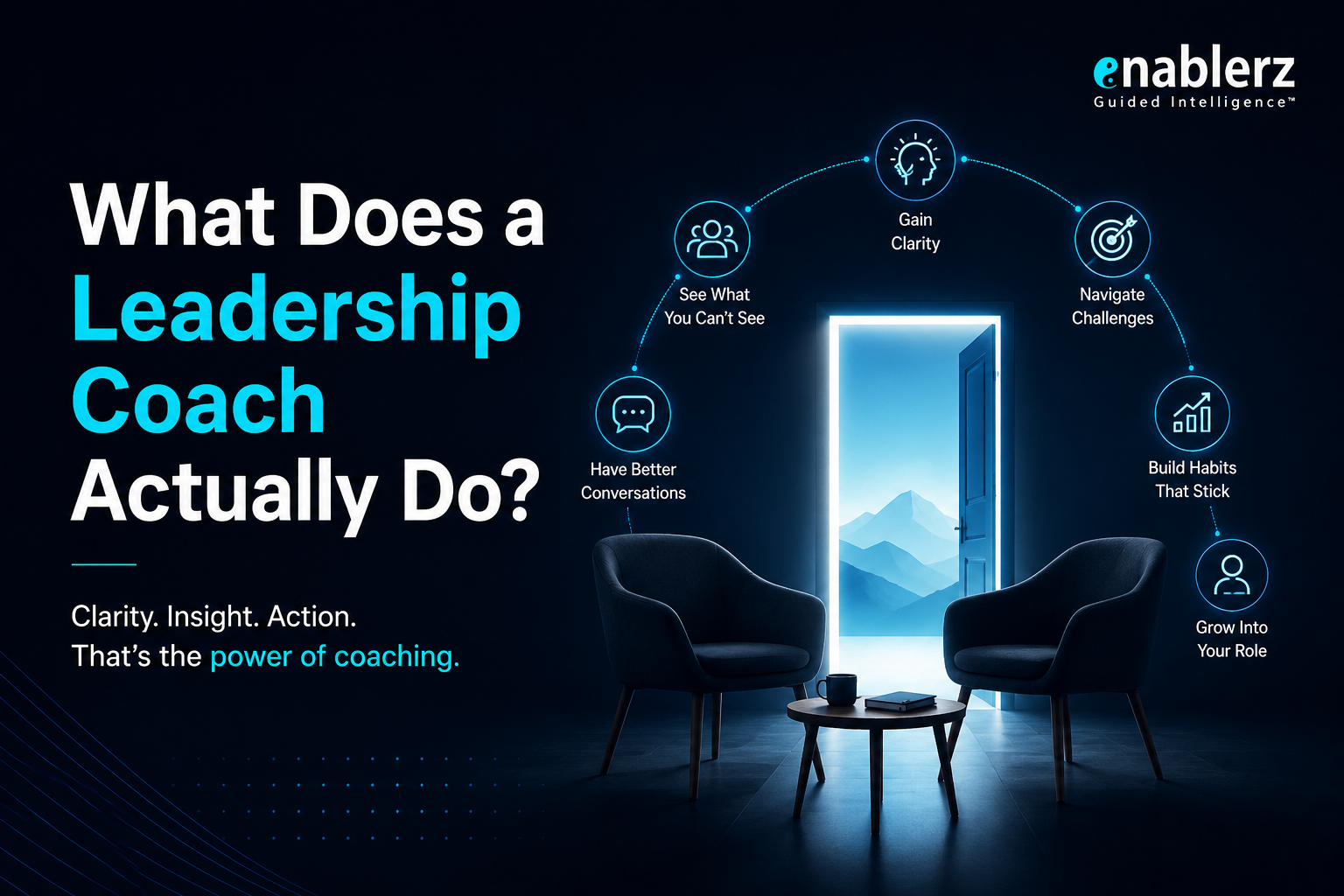
AI coaching platforms — like MOAI™ by Enablerz — allow employees and managers to access coaching-quality conversations outside of scheduled sessions, at whatever time and frequency their situation requires. The AI doesn't replace a human coach. It extends availability in ways a human coach structurally cannot: 3am anxiety, the ten minutes before a difficult conversation, the daily check-in that reinforces a habit.
2. Human coaching for depth
The highest-leverage individuals in your organisation — senior leaders, high-potentials, anyone navigating a significant transition — still benefit most from working with a skilled human coach. The combination of AI breadth and human depth is what a genuinely scalable programme looks like.
3. A coaching culture that embeds the behaviour
The most sustainable form of scale is cultural. Organisations that achieve true coaching culture don't just deploy a coaching platform — they change how managers have conversations. Regular 1:1s that use coaching-style questions. Feedback that opens thinking rather than closing it.
A Practical Framework: Building Your Programme in Three Stages
Stage 1: Define the coverage model (Who gets what?)
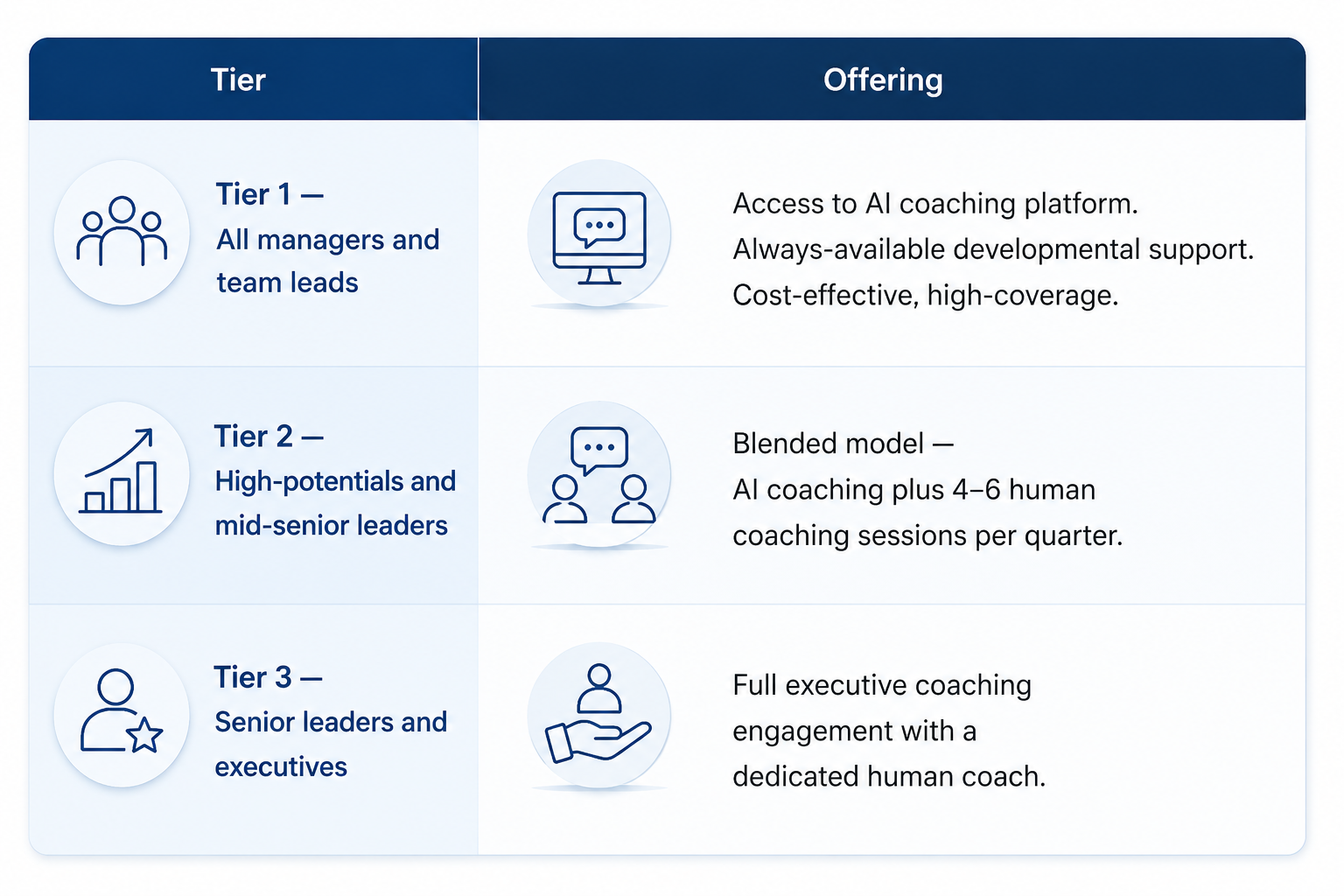
Design for three tiers based on leverage and need:
Stage 2: Choose your measurement framework before you start
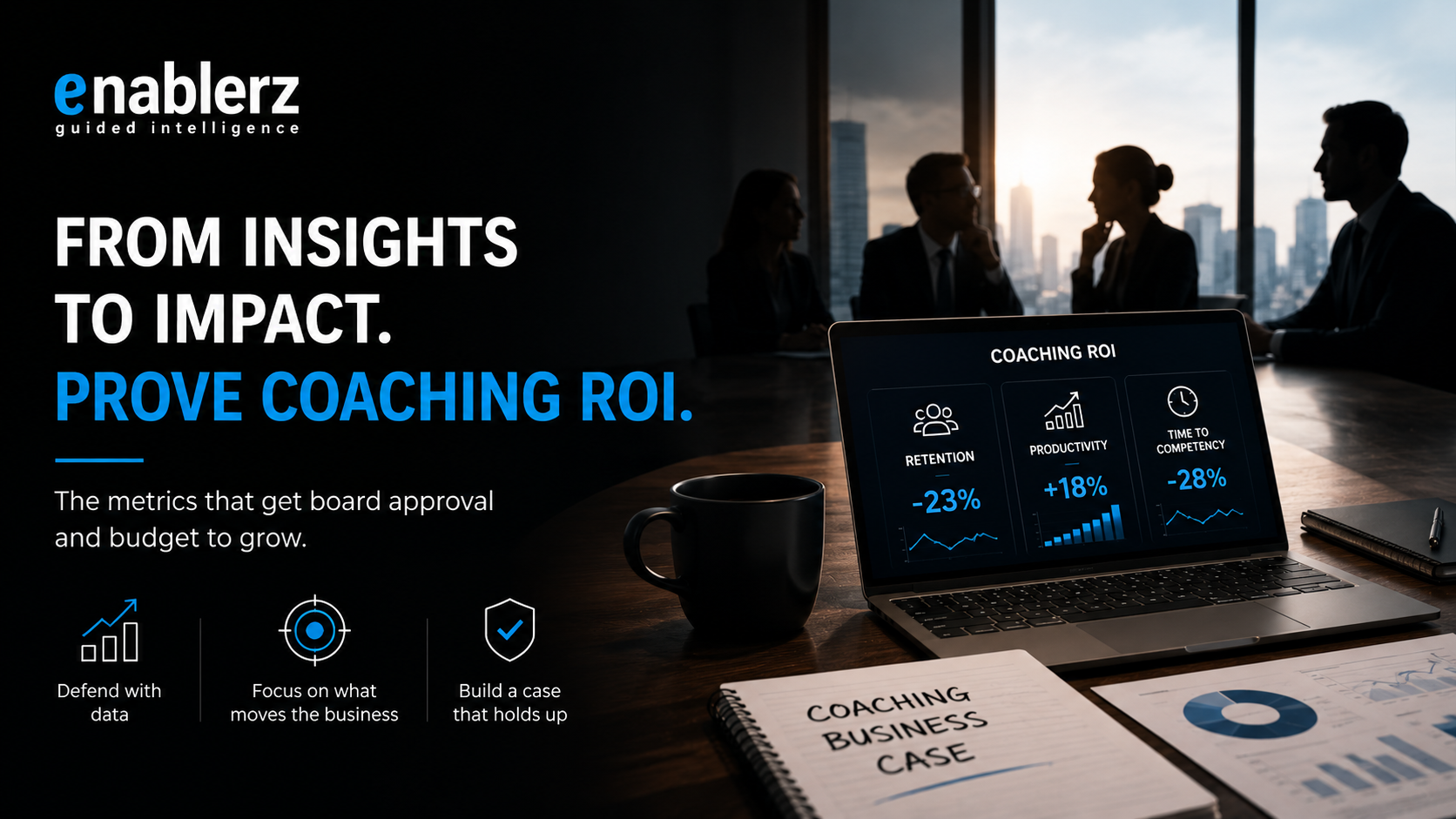
The single biggest reason coaching programmes struggle to get renewed is that they can't demonstrate ROI. Before you launch, decide:
• Leading indicators: Coaching session completion rates, manager 1:1 frequency, 360 feedback scores
• Lagging indicators: Voluntary turnover rates, internal mobility, engagement survey scores by team
• Business outcomes: Performance delta between coached and non-coached teams
Stage 3: Build internal advocacy before you scale
The fastest way to kill a coaching programme is to roll it out to people who didn't ask for it and don't understand why it's valuable. Buy-in from the manager layer before deployment is non-negotiable.
• Run a pilot with a cohort who already understands the value
• Share early results internally — even anecdotal stories, told with permission, are powerful
• Create space for managers to talk to each other about their coaching experience
The Budget Case
The organisations that sustain coaching programmes long-term treat it as infrastructure, not a one-time investment.
• The cost of not coaching is not zero — replacing a mid-level manager costs 50–200% of their annual salary
• Compare to your existing L&D spend, not to nothing — coaching needs to demonstrate better ROI than the training it supplements
• Start with a pilot budget — a phased pilot with defined measurement is an easier internal sell than a three-year programme
What This Looks Like at Real Organisations
Company S (Name changed for confidentiality) deployed MOAI across a team of 100 employees and saw 70% active engagement within six months — not because coaching was mandated, but because people found it genuinely useful.
Company A (Name changed for confidentiality), operating across India, UAE, and Malaysia, used coaching to address management quality consistency across geographies — a challenge that scales with distance.
The One Thing That Makes or Breaks a Coaching Programme
Everything above is operational. But the single most important factor in whether a coaching programme achieves scale is simpler than any of it.
Does leadership actually believe in it?
When the CEO is visibly engaged with coaching — when it's part of how the organisation talks about development, not a pilot buried in the L&D function — adoption follows. Coaching culture comes from the top not because senior leaders control access to it, but because they model what it looks like to invest in your own thinking.
Closing thought:
Coaching at scale isn't simply about giving more people access to coaching. It's about creating an environment where people are encouraged to think, reflect and grow—and where coaching becomes part of how the organisation develops its people.
Ready to Scale Coaching Across Your Organisation?
Coaching shouldn't be limited to the few who can access it.
With ENA™ and MOAI™, Enablerz combines human expertise with AI-powered coaching to make coaching more accessible, scalable and measurable.
→ Book a Free Coaching Strategy Session
FAQ's
1. How can organisations scale employee coaching affordably?
By combining AI coaching for broad access with human coaching for leaders and high-potentials. A tiered model helps organisations expand coverage without significantly increasing costs.
2. Can AI coaching replace human coaching?
No. AI coaching provides accessible, always-available support, while human coaches offer deeper guidance for complex leadership and development needs. The strongest model combines both.
3. What is a tiered coaching model?
It provides different levels of coaching based on role and need—for example, AI coaching for managers, blended AI + human coaching for high-potentials, and dedicated human coaching for executives.
4. How do you measure coaching ROI?
Track indicators such as coaching engagement, manager effectiveness, employee engagement, turnover, internal mobility and business performance.
5. How does AI help scale employee coaching?
AI makes coaching support available whenever employees need it, without the scheduling and capacity limitations of one-to-one coaching.
6. How can organisations build a sustainable coaching culture?
Combine accessible coaching, leadership sponsorship, manager buy-in and coaching behaviours in everyday conversations—not just formal coaching programmes.
About Enablerz™: Enablerz™ is an AI-native coaching platform that makes professional coaching accessible to every employee — not just the senior team. Our MOAI™ AI coach and ENA™ enterprise platform serve individuals and organisations across India and beyond.